
The next unicorns will have five employees.
Why AI that works without being prompted changes who can build a big company, and why we turned Basalt into Pancake, an AI GTM team for small B2B teams.
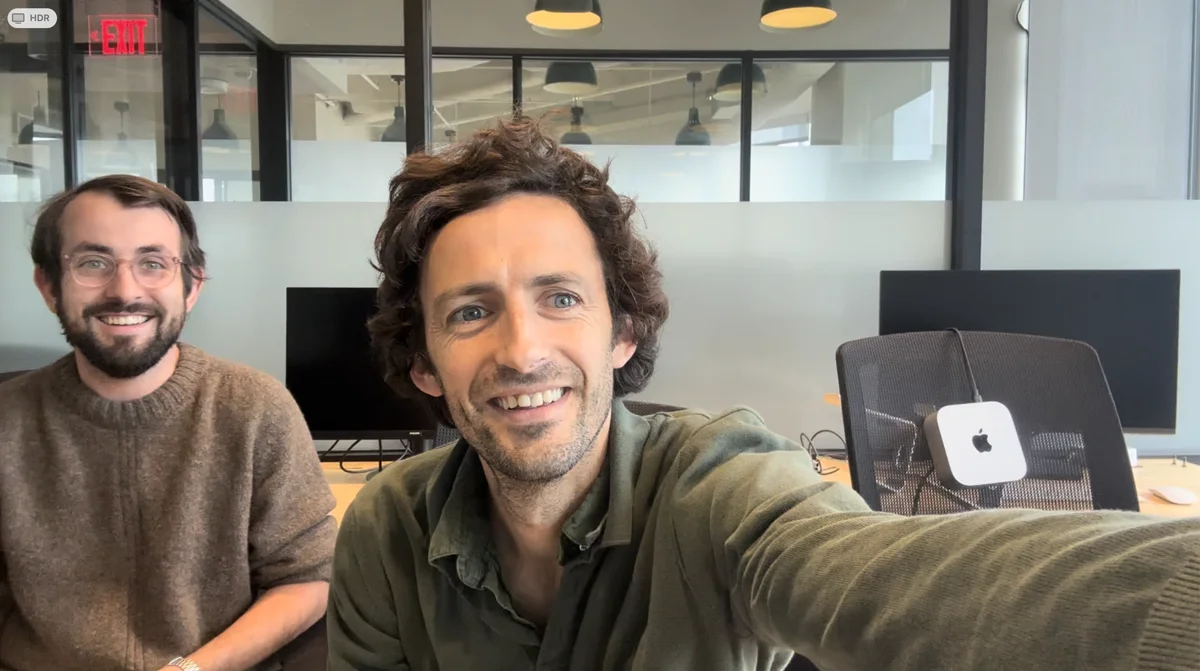
TL;DR: AI won't make you more productive if it still needs you to prompt it. The founders who win are building companies where AI runs operations proactively — while they sleep, eat, and think. We built that infrastructure for ourselves first, realized it was more valuable than our original product, and pivoted. Today that infrastructure is Pancake, an AI GTM team whose agents find buyers for small B2B companies and start the conversations. This is that story.
You have 24 hours in a day. AI doesn't change that.
Every tool in your stack — ChatGPT, Claude, Cursor — is waiting for you to prompt it. The moment you close the tab, it stops. When you're sleeping, eating, or just living your life, your AI workforce is idle.
The bottleneck today isn't intelligence. Models are smart enough. The bottleneck is what engineers call the harness — the infrastructure, memory, and skills that surround a model and let it work without you. Without a harness, AI is a smart tool that only works when you're holding it. With a harness, it keeps working after you close the tab.
We know this because we spent two years building exactly that.
From Basalt to Pancake
We started as Basalt, an AI observability and evaluation platform. Our days were spent embedded with some of the best AI engineering teams in San Francisco — learning an enormous amount, flying constantly between SF and Paris, and falling badly behind on running our own company.
So we used OpenClaw to put operations on autopilot. Agents handling outreach, content, research, internal coordination — all running in Slack, all working while we slept.
It worked better than expected. Then our customers started asking about the internal tooling more than the product we were selling. We were getting more excited demoing it than demoing Basalt.
The conclusion was obvious. We pivoted. Basalt became Pancake.
Since then, we've built Pancake around the job every small company has from day one: finding customers.
What we believe
Scaling used to mean hiring. More revenue required more people — salespeople, ops, support, coordination overhead. AI breaks that relationship.
The companies we find most exciting are built AI-first from day one: AI handles the operational layer, humans focus on what AI can't do. We think there are now two ways to run a company — AI-first, where AI runs the company and humans help, or human-first, where humans run the company and AI waits to be prompted. Companies run the second way will find it harder and harder to compete.
We also believe in Jevons' paradox: as AI makes capability cheaper, more people will use it, not fewer. The founders who benefit most won't be large companies with existing leverage — they'll be the ones who couldn't previously afford to compete. The one-person company running like a ten-person team. The two-person startup entering a market that previously required a full GTM org.
We think the next decade will produce more small companies building significant things than any decade before it. We're building the GTM team that finds them buyers.
What Pancake is
Pancake is an AI GTM team for founders and small B2B companies. It's the harness from the top of this post, applied to go-to-market.
Memory. You add your website. Pancake learns who buys from you: your positioning, ideal customers, offers, proof and objections. It keeps all of it in one shared memory, the GTM Brain, and updates it from what works.
Signals. Pancake's agents track six kinds of buying signals. Someone posts about a topic you choose. Someone engages with a competitor's posts, with a voice your buyers follow, or with your own posts. A company opens a role that matches your buyer, or names a tool you replace in a job post.
A daily rhythm. Every morning brings a fresh batch of leads, and each one names the signal behind it. You approve them in the app or in Slack, where every new lead shows up.
Outreach from your own account. Once you approve a lead, the agents work from your own profile on the professional network: a visit, a like on a recent post, an invite with no note, then up to three messages. The first message pitches nothing. It asks one light question about the signal, so the conversation starts warm.
Articles for search. Pancake also writes articles for Google and AI answers, drawing on the same GTM Brain. Each one waits for your approval.
From your chat window. Claude, ChatGPT and Codex still wait for a prompt. Plug one into Pancake's MCP server, and you can go through today's leads, tweak a signal or start outreach without leaving the chat.
It costs $99 a month, flat. Every agent is included, and nothing is billed per seat or by usage.
Frequently asked questions
- What is the harness problem in AI?
- The harness is the infrastructure, memory, and skills that surround a model and let it work without a human actively prompting it. Without a harness, AI only works when you're holding it. With one, it works around the clock — executing tasks, coordinating agents, and surfacing decisions while you focus on other things.
- What is an AI-first company?
- An AI-first company is one where AI handles the operational layer — growth, engineering coordination, ops — and humans focus exclusively on what AI can't do: relationships, judgment, creativity, and strategy. The company runs on AI infrastructure, not headcount.
- Can a company with five employees become a unicorn?
- Tiny teams have reached billion-dollar outcomes before: Instagram had 13 employees when Facebook bought it for $1 billion in 2012. AI agents that take on recurring work lower the headcount a company needs to operate, so more teams can get there with fewer people.
- What is Pancake?
- Pancake is what Basalt became: an AI GTM team that finds buyers for founders and small B2B companies. Its agents spot people showing buying signals, hand you fresh leads each morning and open the conversation from your own account. They also write search articles for Google and AI answers, and one $99 monthly plan covers every agent.
- Why did you pivot from Basalt to Pancake?
- We built agents to handle operations at Basalt, our AI observability platform, while we spent our days with customers. Those customers got more curious about that internal tooling than about the product we sold. So we pivoted, and Basalt became Pancake.